

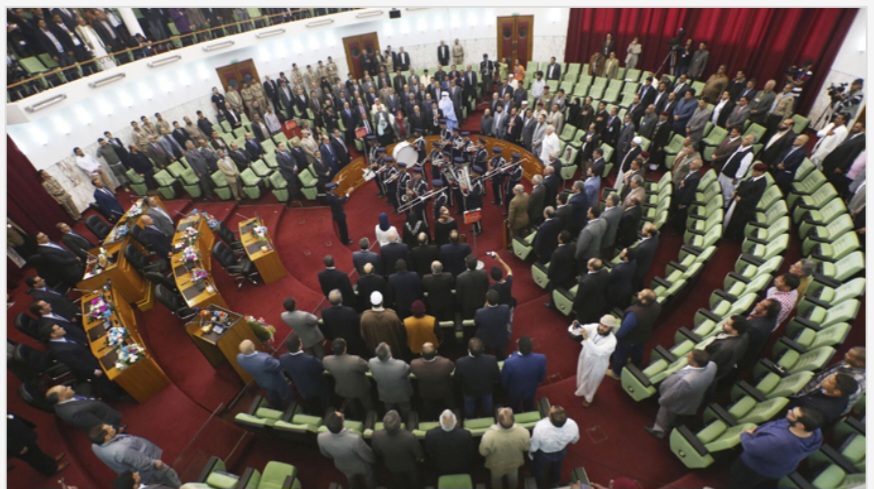
الجمعية الوطنية التأسيسية
مبادرة سياسية لاستعادة الدولة وإنهاء المراحل الانتقالية
من تعدد السلطات إلى سلطة الدولة، ومن شرعية الأمر الواقع إلى شرعية الشعب
1. توطئة
تقف ليبيا أمام منعطف تاريخي خطير بعد سنوات من الانقسام السياسي والمؤسسي وتعثر المسار الانتخابي، رغم تعبير نحو 2.8 مليون ناخب عن إرادتهم في الوصول إلى انتخابات حرة، ورغم صدور قوانين الانتخابات الرئاسية والبرلمانية. وقد أثبت استمرار الخلاف بين الأجسام السياسية القائمة أن إدارة المرحلة الانتقالية بالآليات ذاتها لم تعد قادرة على إنتاج توافق يقود إلى إنهائها.
إن استمرار الانقسام، وتعدد مراكز الشرعية والقرار، وتعاقب الحكومات والمراحل الانتقالية، يهدد بتحول الأزمة المؤقتة إلى واقع دائم؛ الأمر الذي يستدعي العودة إلى الأصل الذي تستمد منه كل الشرعيات، وهو الشعب الليبي صاحب السيادة ومصدر السلطة.
ومن هنا تبرز الحاجة إلى إنشاء جمعية وطنية تأسيسية تمثل الليبيين دون إقصاء أو تهميش، وتكون إطارًا وطنيًا جامعًا يتجاوز حالة الاستقطاب القائمة، ويتولى إنهاء المرحلة الانتقالية من خلال وضع الأساس الدستوري والمؤسسي الذي يقود إلى انتخابات رئاسية وتشريعية حرة ونزيهة، تنقل البلاد من الشرعية الانتقالية إلى الشرعية الدستورية الدائمة.
وتأتي هذه المبادرة مستلهمةً من التجربة الوطنية الليبية في توحيد الإرادة ومقاومة الانقسام، ومن التجارب التاريخية التي لجأت فيها الشعوب إلى أطر وطنية تأسيسية في لحظات الأزمات الكبرى، ومنها تجربة الجمعية الوطنية الفرنسية عام 1871، مع مراعاة خصوصية الحالة الليبية وضرورة بناء حل نابع من إرادة الليبيين أنفسهم.
إن الهدف ليس إنشاء جسم سياسي جديد يضاف إلى الأجسام القائمة، وإنما إنهاء الحاجة إلى الأجسام الانتقالية ذاتها، وإعادة تأسيس شرعية الدولة على إرادة الشعب، ووضع ليبيا على طريق الدولة الدستورية الموحدة المستقرة.
2. مشروعية الجمعية الوطنية التأسيسية
تستمد الجمعية الوطنية التأسيسية مشروعيتها من الإرادة الشعبية الليبية، ومن الضرورة الوطنية لإنهاء المراحل الانتقالية وتجاوز حالة الانقسام السياسي والمؤسسي التي حالت دون الوصول إلى الانتخابات وإرساء دولة مستقرة.
وتأتي المبادرة منسجمة مع مخرجات الحوار المهيكل ومساره الرابع، وما انتهى إليه من ضرورة معالجة أسباب الانسداد السياسي، وتهيئة الظروف لإجراء الانتخابات، وتوحيد مؤسسات الدولة، والوصول إلى أساس دستوري دائم.
وبعد أن أثبتت التجربة الطويلة عجز الأجسام السياسية القائمة عن التوصل إلى توافق يفضي إلى إنهاء المراحل الانتقالية، تبرز الحاجة إلى إطار وطني تأسيسي جامع يتجاوز الاستقطاب القائم، ويمثل الليبيين دون إقصاء أو تهميش، ويتولى استكمال المسار الدستوري والسياسي وصولًا إلى انتخابات رئاسية وتشريعية حرة ونزيهة.
وتُنشأ الجمعية بترتيب وطني مؤقت ومحدد المدة والاختصاص، بمبادرة وطنية وبما ينسجم مع الأطر الدستورية والسياسية القائمة، على أن تكون مهمتها الأساسية إنهاء المراحل الانتقالية لا استحداث مرحلة انتقالية جديدة.
وبذلك تكون الجمعية الوطنية التأسيسية أداة لإنهاء المراحل الانتقالية، لا مرحلة انتقالية جديدة؛ وآلية لتنفيذ التوافق الوطني، لا جسمًا إضافيًا للصراع السياسي؛ وجسرًا إلى الشرعية الدستورية الدائمة، لا بديلًا عنها.
3. آلية تكوين الجمعية الوطنية التأسيسية
تنشأ الجمعية الوطنية التأسيسية عبر مرحلتين مترابطتين:
تشكيل لجنة تحضيرية وطنية مستقلة.
اختيار وتشكيل الجمعية الوطنية التأسيسية.
3.1 اللجنة التحضيرية الوطنية
تُشكَّل لجنة تحضيرية وطنية مستقلة من 21 إلى 30 عضوًا من الشخصيات الوطنية المشهود لها بالنزاهة والكفاءة والمصداقية، ومن خلفيات فكرية وثقافية واجتماعية وسياسية متنوعة، بما يعكس التنوع الوطني الليبي.
وتنتخب اللجنة في اجتماعها الأول منسقًا لها، وتعمل باستقلالية كاملة عن الأجسام السياسية والتنفيذية القائمة.
3.1.1 أهداف اللجنة التحضيرية
تتولى اللجنة إجراء مشاورات وطنية واسعة مع مختلف مكونات المجتمع الليبي، ومع الأطراف والقوى السياسية والاجتماعية، دون إقصاء أو تهميش، بهدف الوصول إلى تشكيل جمعية وطنية تأسيسية جامعة تمثل الشعب الليبي بمختلف مكوناته ومناطقه وتياراته، على أساس الكفاءة والتوازن الوطني، وليس على أساس المحاصصة الجهوية.
3.1.2 معايير عضوية اللجنة التحضيرية
يراعى في اختيار أعضاء اللجنة التحضيرية ألا يكون العضو:
ü طرفًا في الصراع السياسي أو في أعمال العنف.
ü شاغلًا لمنصب قيادي في الأجسام السياسية أو التنفيذية القائمة.
ü عضوًا في تشكيل مسلح أو هيئة عسكرية أو شبه عسكرية.
ü مدانًا بجناية أو جنحة مخلة بالشرف أو الأمانة، ما لم يُرد إليه اعتباره.
ü خاضعًا لتحقيق قضائي جدي في قضايا فساد أو انتهاكات جسيمة لحقوق الإنسان.
ü منخرطًا في التحريض على العنف أو عرقلة المصالحة والسلم الأهلي.
ü معروفًا بتوظيف المال السياسي أو استخدام النفوذ لتحقيق مصالح خاصة.
3.1.3 مهام اللجنة التحضيرية
تتولى اللجنة التحضيرية المهام الآتية:
Ø إجراء المشاورات الوطنية وتحديد أعضاء الجمعية الوطنية التأسيسية وفق معايير التمثيل والكفاءة والنزاهة والتنوع، دون إقصاء أو تهميش.
Ø إعداد الوثائق التأسيسية الرئيسية للجمعية، بالاستعانة بالخبراء والمختصين، لعرضها على الجمعية عند انعقادها.
Ø إعداد مشروع اللائحة الداخلية للجمعية، لاعتماده في جلستها الأولى.
Ø إعداد مشروع جدول زمني ملزم لأعمال الجمعية، بما يضمن إنجاز مهمتها خلال مدة محددة.
Ø تهيئة المتطلبات اللوجستية والفنية والقانونية اللازمة لبدء أعمال الجمعية واستمرارها حتى إنجاز مهمتها.
Ø إعداد خطة للتواصل والحوار المجتمعي تضمن مشاركة الليبيين والتعريف بأهداف الجمعية ومراحل عملها ومخرجاتها.
وتنتهي مهمة اللجنة التحضيرية بانعقاد الجمعية الوطنية التأسيسية وانتخاب هيئتها وبدء أعمالها، لتنتقل مسؤولية المرحلة التأسيسية إلى الجمعية وفقًا لاختصاصاتها والجدول الزمني المعتمد.
3.2 الجمعية الوطنية التأسيسية
تتكون الجمعية الوطنية التأسيسية وفق الآلية الوطنية المعتمدة لإنشائها، وتكون هيئة تأسيسية مؤقتة ومستقلة، ولا يزيد عددها عن 150 عضواً، تمثل مختلف مكونات الشعب الليبي، وتعمل وفق اختصاصات محددة ومدة زمنية معلومة، بهدف إنهاء المراحل الانتقالية ووضع الأسس الدستورية والسياسية والمؤسسية التي تقود إلى دولة مستقرة ذات شرعية دائمة.
3.2.1 أهداف الجمعية الوطنية التأسيسية
تهدف الجمعية إلى وضع الأسس اللازمة لبناء دولة ليبية موحدة، مدنية، ديمقراطية، كاملة السيادة، تقوم على المواطنة المتساوية وسيادة القانون واحترام حقوق الإنسان، وذلك من خلال:
v وضع الأسس العامة لبناء الدولة ومؤسساتها الدستورية.
v التوافق على الوثائق التأسيسية التي تشكل المرجعية السياسية والدستورية للمرحلة المقبلة.
v استكمال المسار المؤدي إلى دستور دائم وانتخابات رئاسية وتشريعية حرة ونزيهة.
v وضع الإطار الوطني اللازم لإنهاء الانقسام وتحقيق المصالحة والاستقرار وبناء الثقة.
3.2.2 اختصاصات الجمعية الوطنية التأسيسية
تتولى الجمعية، من خلال الحوار والتوافق الوطني، إعداد وإقرار الوثائق التأسيسية الرئيسية الآتية:
1. ميثاق وطني للعيش المشترك والسلم الأهلي يرسخ وحدة الدولة والمواطنة المتساوية ويحظر الإقصاء والعنف السياسي.
2. وثيقة وطنية للمصالحة الشاملة والعدالة التصالحية تتضمن الأسس والمبادئ والآليات اللازمة لمعالجة آثار النزاع وتحقيق المصالحة الوطنية.
3. الرؤية الوطنية الجامعة للمستقبل المشترك لليبيين، مرفقة بإطار عام لبرنامج وطني لتنفيذها.
4. وثيقة أسس الحكم المحلي واللامركزية والتنمية الوطنية المتوازنة والمستدامة بما يضمن عدالة توزيع الموارد والتنمية بين مناطق البلاد.
5. وثيقة المبادئ والأسس الدستورية التي يستند إليها إعداد الدستور الدائم، بما يضمن وحدة الدولة والفصل بين السلطات والحقوق والحريات وسيادة القانون.
6. وثيقة بناء الثقة بين الأطراف والمكونات الليبية، تتضمن إجراءات متبادلة لمعالجة المخاوف وتهيئة البيئة السياسية والأمنية اللازمة للانتقال إلى الانتخابات.
7. وثيقة تمكين المرأة والشباب وأصحاب الهمم وتعزيز مشاركتهم الفاعلة في بناء الدولة وصنع القرار.
8. إعداد الإطار العام للانتقال إلى الانتخابات وفق الدستور الدائم، بما يضمن نزاهتها وشفافيتها وقبول نتائجها.
وتُعرض الوثائق ذات الطبيعة التأسيسية والسيادية على الشعب الليبي للاستفتاء العام وفق آلية قانونية وإجرائية واضحة، وتكتسب الوثائق المعتمدة شعبيًا قوة المرجعية الوطنية التي تستند إليها عملية استكمال الدستور وإعادة بناء مؤسسات الدولة.
3.2.3 الاختصاصات الاستثنائية
لا تمارس الجمعية اختصاصات تنفيذية أو تشريعية دائمة، ولا تحل محل مؤسسات الدولة القائمة.
ويجوز لها، في حالات الضرورة القصوى والمرتبطة مباشرة بإنجاز مهمتها التأسيسية، اتخاذ توصيات أو تدابير تأسيسية مؤقتة بالقدر اللازم لحماية مسار الانتقال السياسي والسلم الأهلي، على أن تكون محددة المدة والغاية، وألا تنشئ سلطات دائمة أو تتعارض مع الحقوق والحريات الأساسية.
3.2.4 آليات عمل الجمعية الوطنية التأسيسية
v تعقد الجمعية اجتماعها الأول خلال مدة لا تتجاوز أسبوعين من اكتمال تشكيلها، ويرأس الجلسة الافتتاحية أكبر الأعضاء سنًا.
v تنتخب الجمعية في جلستها الأولى رئيسًا ونائبًا للرئيس ومقررًا من بين أعضائها، وتنظم أعمالها وفق لائحة داخلية تعتمدها في بداية ولايتها.
v تكون عضوية الجمعية مؤقتة وتأسيسية، ويستمر الأعضاء في وظائفهم الأصلية، وفق الضوابط التي تحددها اللائحة الداخلية، ولا تتحمل الدولة إلا النفقات الضرورية المرتبطة بأداء مهام الجمعية.
v تعتمد الجمعية في أعمالها مبدأ التوافق الوطني، وعند تعذر التوافق تُتخذ القرارات وفق آلية تصويت محددة في اللائحة الداخلية، بما يمنع تعطيل أعمالها من أي طرف.
v تستعين الجمعية بالخبراء والمختصين والجامعات ومؤسسات المجتمع المدني، وتفتح قنوات تشاور عامة مع المواطنين ومختلف المكونات الوطنية.
v تتولى المفوضية الوطنية العليا للانتخابات إدارة أي استفتاء أو انتخابات تُحال إليها وفق الإطار القانوني المعتمد، وبما يتفق مع المعايير الدولية للنزاهة والشفافية.
v تلتزم الجمعية بجدول زمني محدد، ولا يجوز تمديد ولايتها إلا لضرورة استثنائية وبآلية معلنة ومحددة.
v تنتهي ولاية الجمعية تلقائيًا باستكمال مهمتها التأسيسية وإجراء الانتخابات العامة وتسلم السلطات المنتخبة مهامها، ولا يجوز إعادة تشكيلها أو تمديد ولايتها تحت أي مسمى.
3.2.5 مخرجات الجمعية الوطنية التأسيسية
تتمثل المخرجات النهائية للجمعية في:
1. اعتماد الوثائق التأسيسية التي يقرها الشعب الليبي في الاستفتاء العام.
2. وضع الأسس الدستورية والسياسية اللازمة لإصدار دستور دائم للدولة الليبية.
3. استكمال الإطار الوطني للمصالحة وبناء السلام والسلم الأهلي.
4. تهيئة البيئة السياسية والمؤسسية والقانونية اللازمة للانتقال إلى الشرعية الدائمة.
5. إجراء انتخابات رئاسية وتشريعية حرة ونزيهة وفق الدستور والإطار القانوني المعتمد.
6. تسليم السلطة إلى المؤسسات المنتخبة، وبذلك تنتهي المراحل الانتقالية وتنتهي معها ولاية الجمعية الوطنية التأسيسية.
ا. د. احتيوش فرج احتيوش
رئيس الحراك الوطني نعم ليبيا
طرابلس 12 سبتمبر 2026
A National Initiative for a Comprehensive Political Solution in Libya
The Constituent National Assembly
From Multiple Authorities to State Authority, and from De Facto Legitimacy to the Legitimacy of the People
1. Preamble
Libya stands at a critical historical crossroads after years of political and institutional division and the stalemate of the electoral process, despite approximately 2.8 million voters having expressed their will to reach free elections, and despite the issuance of laws governing presidential and parliamentary elections. The persistence of disagreements among the existing political bodies has demonstrated that managing the transitional phase through the same mechanisms is no longer capable of producing a consensus that can bring it to an end.
The continuation of division, the multiplicity of centers of legitimacy and decision-making, and the succession of governments and transitional phases threaten to turn a temporary crisis into a permanent reality. This makes it necessary to return to the original source from which all legitimacy derives: the Libyan people, who are sovereign and the source of authority.
The need therefore arises to establish a Constituent National Assembly that represents Libyans without exclusion or marginalization, and that serves as an inclusive national framework capable of transcending the current polarization. Its task would be to end the transitional phase by establishing the constitutional and institutional foundations leading to free and fair presidential and legislative elections, thereby moving the country from transitional legitimacy to permanent constitutional legitimacy.
This initiative draws inspiration from Libya's national experience in unifying its will and resisting division, as well as from historical experiences in which peoples resorted to national constituent frameworks at moments of major crisis, including the experience of the French National Assembly in 1871, while taking into account the particularities of the Libyan situation and the need to build a solution arising from the will of Libyans themselves.
The objective is not to create a new political body to be added to the existing bodies, but rather to end the need for transitional bodies themselves, re-establish the legitimacy of the State on the will of the people, and place Libya on the path toward a unified, stable constitutional state.
2. Legitimacy of the Constituent National Assembly
The Constituent National Assembly derives its legitimacy from the popular will of the Libyan people and from the national necessity of ending the transitional phases and overcoming the political and institutional division that has prevented the country from reaching elections and establishing a stable State.
The initiative is consistent with the outcomes of the Structured Dialogue and its fourth track, and with the resulting need to address the causes of political deadlock, create the conditions for elections, unify State institutions, and reach a permanent constitutional foundation.
After the prolonged experience has demonstrated the inability of the existing political bodies to reach a consensus capable of ending the transitional phases, there is a need for an inclusive national constituent framework that transcends the existing polarization, represents Libyans without exclusion or marginalization, and completes the constitutional and political process leading to free and fair presidential and legislative elections.
The Assembly shall be established through a temporary national arrangement with a defined duration and mandate, arising from a national initiative and consistent with the existing constitutional and political frameworks. Its primary mission shall be to end the transitional phases, not to create a new transitional phase.
Accordingly, the Constituent National Assembly shall be an instrument for ending the transitional phases, not a new transition; a mechanism for implementing national consensus, not an additional body in the political conflict; and a bridge toward permanent constitutional legitimacy, not a substitute for it.
3. Mechanism for Establishing the Constituent National Assembly
The Constituent National Assembly shall be established through two interrelated stages:
1. Formation of an Independent National Preparatory Committee.
2. Selection and formation of the Constituent National Assembly.
3.1 The National Preparatory Committee
An independent National Preparatory Committee shall be formed, consisting of 21 to 30 members selected from nationally recognized figures known for integrity, competence and credibility, and drawn from diverse intellectual, cultural, social and political backgrounds, reflecting Libya's national diversity.
The Committee shall elect a coordinator at its first meeting and shall operate with full independence from the existing political and executive bodies.
3.1.1 Objectives of the Preparatory Committee
The Committee shall conduct broad national consultations with all components of Libyan society and with political and social parties and forces, without exclusion or marginalization, with the aim of establishing an inclusive Constituent National Assembly representing the Libyan people in all their components, regions and currents, on the basis of competence and national balance rather than regional quota allocation.
3.1.2 Membership Criteria for the Preparatory Committee
In selecting members of the Preparatory Committee, the following persons shall be excluded:
• A person who is a party to the political conflict or involved in acts of violence.
• A person holding a leadership position in an existing political or executive body.
• A member of an armed formation or a military or paramilitary body.
• A person convicted of a felony or an offense involving dishonor or breach of trust, unless rehabilitated.
• A person subject to a serious judicial investigation concerning corruption or grave human rights violations.
• A person involved in incitement to violence or obstruction of reconciliation and civil peace.
• A person known for using political money or influence to pursue private interests.
3.1.3 Tasks of the Preparatory Committee
The Preparatory Committee shall undertake the following tasks:
• Conduct national consultations and identify the members of the Constituent National Assembly according to criteria of representation, competence, integrity and diversity, without exclusion or marginalization.
• Prepare the principal constituent documents of the Assembly, with the assistance of experts and specialists, for presentation to the Assembly upon its convening.
• Prepare a draft internal regulation of the Assembly for adoption at its first session.
• Prepare a binding timetable for the Assembly's work to ensure completion of its mandate within a specified period.
• Prepare the logistical, technical and legal requirements necessary for the commencement and continuity of the Assembly's work until completion of its mission.
• Prepare a communication and social dialogue plan ensuring the participation of Libyans and raising public awareness of the Assembly's objectives, stages of work and outcomes.
The mandate of the Preparatory Committee shall end upon the convening of the Constituent National Assembly, the election of its bureau, and the commencement of its work. Responsibility for the constituent phase shall then transfer to the Assembly in accordance with its mandate and approved timetable.
3.2 The Constituent National Assembly
The Constituent National Assembly shall be formed according to the nationally approved mechanism for its establishment. It shall be a temporary and independent constituent body of no more than 150 members representing the various components of the Libyan people. It shall operate under defined powers and for a known period, with the objective of ending the transitional phases and establishing the constitutional, political and institutional foundations leading to a stable State with permanent legitimacy.
3.2.1 Objectives of the Constituent National Assembly
The Assembly shall aim to establish the foundations necessary for building a unified, civil, democratic and fully sovereign Libyan State based on equal citizenship, the rule of law and respect for human rights, through:
• Establishing the general foundations for building the State and its constitutional institutions.
• Reaching consensus on the constituent documents that will form the political and constitutional reference for the next phase.
• Completing the process leading to a permanent Constitution and free and fair presidential and legislative elections.
• Establishing the national framework necessary to end division, achieve reconciliation and stability, and build trust.
3.2.2 Powers of the Constituent National Assembly
Through national dialogue and consensus, the Assembly shall prepare and approve the following principal constituent documents:
1. A National Pact for Coexistence and Civil Peace, reinforcing the unity of the State and equal citizenship and prohibiting exclusion and political violence.
2. A National Document for Comprehensive Reconciliation and Restorative Justice, containing the foundations, principles and mechanisms necessary to address the consequences of conflict and achieve national reconciliation.
3. An Inclusive National Vision for the Shared Future of Libyans, accompanied by a general framework for a national implementation program.
4. A Document on the Foundations of Local Governance, Decentralization and Balanced and Sustainable National Development, ensuring equitable distribution of resources and development among the country's regions.
5. A Document on Constitutional Principles and Foundations upon which the permanent Constitution shall be prepared, ensuring the unity of the State, separation of powers, rights and freedoms, and the rule of law.
6. A Confidence-Building Document among Libyan parties and components, including reciprocal measures to address concerns and prepare the political and security environment necessary for the transition to elections.
7. A Document on Empowering Women, Youth and Persons with Disabilities and strengthening their effective participation in State-building and decision-making.
8. Preparation of the general framework for the transition to elections under the permanent Constitution, ensuring their integrity, transparency and acceptance of their results.
Documents of a constituent and sovereign nature shall be submitted to the Libyan people for a public referendum in accordance with a clear legal and procedural mechanism. The documents approved by the people shall acquire the force of a national reference upon which the completion of the Constitution and the rebuilding of State institutions shall be based.
3.2.3 Exceptional Powers
The Assembly shall not exercise permanent executive or legislative powers and shall not replace the existing institutions of the State.
In cases of extreme necessity directly related to the completion of its constituent mission, the Assembly may adopt recommendations or temporary constituent measures to the extent necessary to protect the political transition and civil peace, provided that such measures have a defined duration and purpose, do not establish permanent powers, and do not conflict with fundamental rights and freedoms.
3.2.4 Working Mechanisms of the Constituent National Assembly
• The Assembly shall hold its first meeting within no more than two weeks of the completion of its formation, chaired by the oldest member.
• At its first session, the Assembly shall elect from among its members a President, Vice-President and Rapporteur, and shall organize its work according to internal regulations adopted at the beginning of its mandate.
• Membership shall be temporary and constituent. Members shall retain their original employment, subject to the rules established by the internal regulations, and the State shall bear only the necessary expenses directly related to the performance of the Assembly's duties.
• The Assembly shall adopt national consensus as the guiding principle. Where consensus cannot be reached, decisions shall be taken according to a voting mechanism defined in the internal regulations, preventing any party from obstructing its work.
• The Assembly shall make use of experts, specialists, universities and civil society organizations and shall establish channels for public consultation with citizens and the various national components.
• The High National Elections Commission shall administer any referendum or election referred to it under the approved legal framework and in accordance with international standards of integrity and transparency.
• The Assembly shall adhere to a defined timetable. Its mandate may be extended only for an exceptional necessity and through a publicly announced and clearly defined mechanism.
• The mandate of the Assembly shall automatically end upon completion of its constituent mission, the holding of general elections, and the assumption of office by the elected authorities. The Assembly may not be reconstituted or have its mandate extended under any name.
3.2.5 Outputs of the Constituent National Assembly
The final outputs of the Assembly shall include:
1. Adoption of the constituent documents approved by the Libyan people through a public referendum.
2. Establishment of the constitutional and political foundations necessary for issuing a permanent Constitution for the Libyan State.
3. Completion of the national framework for reconciliation, peacebuilding and civil peace.
4. Preparation of the political, institutional and legal environment necessary for transition to permanent legitimacy.
5. Conduct of free and fair presidential and legislative elections in accordance with the Constitution and the approved legal framework.
6. Transfer of authority to the elected institutions, thereby ending the transitional phases and, with them, the mandate of the Constituent National Assembly.
Prof. Dr. Ehtuish Farag Ehtuish
President of the National Movement “Yes Libya”
Tripoli, 12 September 2026
L’Assemblée nationale constituante
Initiative politique pour restaurer l’État et mettre fin aux phases de transition
De la multiplicité des autorités à l’autorité de l’État, et de la légitimité de fait à la légitimité du peuple
1. Préambule
La Libye se trouve à un tournant historique critique après des années de division politique et institutionnelle et d’enlisement du processus électoral, malgré le fait qu’environ 2,8 millions d’électeurs aient exprimé leur volonté de parvenir à des élections libres, et malgré l’adoption des lois relatives aux élections présidentielle et parlementaires. La persistance des divergences entre les organes politiques existants a démontré que la gestion de la phase de transition selon les mêmes mécanismes n’est plus en mesure de produire un consensus permettant d’y mettre fin.
La persistance de la division, la multiplicité des centres de légitimité et de décision, ainsi que la succession des gouvernements et des phases de transition, menacent de transformer une crise temporaire en une réalité permanente. Cela impose de revenir à la source première dont procède toute légitimité : le peuple libyen, détenteur de la souveraineté et source du pouvoir.
De là découle la nécessité de créer une Assemblée nationale constituante représentant les Libyens sans exclusion ni marginalisation, et constituant un cadre national inclusif capable de dépasser la polarisation actuelle. Elle aura pour mission de mettre fin à la phase de transition en établissant les fondements constitutionnels et institutionnels conduisant à des élections présidentielle et législatives libres et équitables, faisant ainsi passer le pays de la légitimité transitoire à la légitimité constitutionnelle permanente.
Cette initiative s’inspire de l’expérience nationale libyenne en matière d’unification de la volonté et de résistance à la division, ainsi que des expériences historiques dans lesquelles les peuples ont eu recours à des cadres nationaux constituants dans les moments de grandes crises, notamment l’expérience de l’Assemblée nationale française de 1871, tout en tenant compte des particularités de la situation libyenne et de la nécessité de construire une solution issue de la volonté des Libyens eux-mêmes.
L’objectif n’est pas de créer un nouvel organe politique qui viendrait s’ajouter aux organes existants, mais de mettre fin à la nécessité même des organes de transition, de refonder la légitimité de l’État sur la volonté du peuple et d’engager la Libye sur la voie d’un État constitutionnel unifié et stable.
2. Légitimité de l’Assemblée nationale constituante
L’Assemblée nationale constituante tire sa légitimité de la volonté populaire libyenne et de la nécessité nationale de mettre fin aux phases de transition et de dépasser l’état de division politique et institutionnelle qui a empêché la tenue des élections et l’établissement d’un État stable.
L’initiative s’inscrit dans le prolongement des résultats du Dialogue structuré et de son quatrième axe, ainsi que de la nécessité qui en découle de traiter les causes de l’impasse politique, de créer les conditions nécessaires à la tenue des élections, d’unifier les institutions de l’État et de parvenir à une base constitutionnelle permanente.
Après que la longue expérience a démontré l’incapacité des organes politiques existants à parvenir à un consensus permettant de mettre fin aux phases de transition, apparaît la nécessité d’un cadre national constituant et inclusif, dépassant la polarisation actuelle, représentant les Libyens sans exclusion ni marginalisation et achevant le processus constitutionnel et politique en vue d’élections présidentielle et législatives libres et équitables.
L’Assemblée sera créée dans le cadre d’un dispositif national temporaire, à durée et compétences déterminées, à l’initiative nationale et en cohérence avec les cadres constitutionnels et politiques existants, sa mission essentielle étant de mettre fin aux phases de transition et non de créer une nouvelle phase de transition.
Ainsi, l’Assemblée nationale constituante sera un instrument destiné à mettre fin aux phases de transition, et non une nouvelle transition ; un mécanisme de mise en œuvre du consensus national, et non un organe supplémentaire du conflit politique ; un pont vers la légitimité constitutionnelle permanente, et non un substitut à celle-ci.
3. Mécanisme de constitution de l’Assemblée nationale constituante
L’Assemblée nationale constituante sera constituée en deux étapes interdépendantes :
La formation d’un Comité préparatoire national indépendant.
La sélection et la constitution de l’Assemblée nationale constituante.
3.1. Le Comité préparatoire national
Il sera constitué un Comité préparatoire national indépendant composé de 21 à 30 membres choisis parmi des personnalités nationales reconnues pour leur intégrité, leur compétence et leur crédibilité, issues de milieux intellectuels, culturels, sociaux et politiques diversifiés, reflétant la diversité nationale libyenne.
Lors de sa première réunion, le Comité élira son coordinateur et exercera ses fonctions en toute indépendance à l’égard des organes politiques et exécutifs existants.
3.1.1. Objectifs du Comité préparatoire
Le Comité conduira de larges consultations nationales avec les différentes composantes de la société libyenne ainsi qu’avec les parties et forces politiques et sociales, sans exclusion ni marginalisation, afin de parvenir à la constitution d’une Assemblée nationale constituante inclusive représentant le peuple libyen dans ses différentes composantes, régions et courants, sur la base de la compétence et de l’équilibre national, et non sur la base de quotas régionaux.
3.1.2. Critères d’éligibilité des membres du Comité préparatoire
Lors de la sélection des membres du Comité préparatoire, il sera veillé à ce que le membre ne soit pas :
partie au conflit politique ou impliqué dans des actes de violence ;
titulaire d’une fonction dirigeante au sein des organes politiques ou exécutifs existants ;
membre d’une formation armée ou d’un corps militaire ou paramilitaire ;
condamné pour un crime ou un délit portant atteinte à l’honneur ou à la probité, sauf réhabilitation ;
faisant l’objet d’une enquête judiciaire sérieuse pour des faits de corruption ou de graves violations des droits de l’homme ;
impliqué dans l’incitation à la violence ou dans l’entrave à la réconciliation et à la paix civile ;
connu pour l’utilisation de l’argent politique ou l’usage de l’influence à des fins personnelles.
3.1.3. Missions du Comité préparatoire
Le Comité préparatoire aura pour missions :
mener les consultations nationales et déterminer les membres de l’Assemblée nationale constituante selon des critères de représentation, de compétence, d’intégrité et de diversité, sans exclusion ni marginalisation ;
préparer les principaux documents constitutifs de l’Assemblée, avec l’assistance d’experts et de spécialistes, afin de les soumettre à l’Assemblée lors de son installation ;
préparer le projet de règlement intérieur de l’Assemblée, en vue de son adoption lors de sa première séance ;
préparer un calendrier contraignant des travaux de l’Assemblée afin de garantir l’accomplissement de sa mission dans un délai déterminé ;
préparer les conditions logistiques, techniques et juridiques nécessaires au démarrage des travaux de l’Assemblée et à leur continuité jusqu’à l’accomplissement de sa mission ;
élaborer un plan de communication et de dialogue avec la société garantissant la participation des Libyens et faisant connaître les objectifs de l’Assemblée, les étapes de ses travaux et ses résultats.
Le mandat du Comité préparatoire prendra fin avec la réunion de l’Assemblée nationale constituante, l’élection de son bureau et le début de ses travaux, la responsabilité de la phase constituante étant alors transférée à l’Assemblée conformément à ses compétences et au calendrier approuvé.
3.2. L’Assemblée nationale constituante
L’Assemblée nationale constituante sera constituée conformément au mécanisme national approuvé pour sa création. Elle sera un organe constituant temporaire et indépendant, composé d’au plus 150 membres représentant les différentes composantes du peuple libyen.
Elle exercera ses fonctions dans le cadre de compétences définies et pour une durée déterminée, avec pour objectif de mettre fin aux phases de transition et d’établir les fondements constitutionnels, politiques et institutionnels conduisant à un État stable doté d’une légitimité permanente.
3.2.1. Objectifs de l’Assemblée nationale constituante
L’Assemblée aura pour objectif d’établir les fondements nécessaires à la construction d’un État libyen unifié, civil, démocratique et pleinement souverain, fondé sur l’égalité des citoyens, l’État de droit et le respect des droits de l’homme, à travers :
l’établissement des principes généraux pour la construction de l’État et de ses institutions constitutionnelles ;
la recherche d’un consensus sur les documents constitutifs devant servir de référence politique et constitutionnelle pour la prochaine phase ;
l’achèvement du processus conduisant à une Constitution permanente et à des élections présidentielle et législatives libres et équitables ;
la mise en place du cadre national nécessaire pour mettre fin à la division, réaliser la réconciliation et la stabilité et instaurer la confiance.
3.2.2. Compétences de l’Assemblée nationale constituante
Par le dialogue et le consensus national, l’Assemblée préparera et adoptera les principaux documents constitutifs suivants :
Un Pacte national pour la coexistence et la paix civile, consacrant l’unité de l’État et l’égalité des citoyens et interdisant l’exclusion et la violence politique.
Un Document national pour la réconciliation globale et la justice restaurative, comprenant les fondements, principes et mécanismes nécessaires pour traiter les conséquences du conflit et réaliser la réconciliation nationale.
Une Vision nationale inclusive pour l’avenir commun des Libyens, accompagnée d’un cadre général pour un programme national de mise en œuvre.
Un Document sur les fondements de la gouvernance locale, de la décentralisation et du développement national équilibré et durable, garantissant une répartition équitable des ressources et du développement entre les régions du pays.
Un Document sur les principes et fondements constitutionnels sur lesquels reposera l’élaboration de la Constitution permanente, garantissant l’unité de l’État, la séparation des pouvoirs, les droits et libertés et l’État de droit.
Un Document sur l’instauration de la confiance entre les parties et les composantes libyennes, comprenant des mesures réciproques destinées à répondre aux préoccupations et à préparer l’environnement politique et sécuritaire nécessaire à la transition vers les élections.
Un Document sur l’autonomisation des femmes, des jeunes et des personnes handicapées et sur le renforcement de leur participation effective à la construction de l’État et à la prise de décision.
L’élaboration du cadre général de la transition vers les élections conformément à la Constitution permanente, garantissant leur intégrité, leur transparence et l’acceptation de leurs résultats.
Les documents à caractère constituant et souverain seront soumis au peuple libyen par référendum populaire, selon un mécanisme juridique et procédural clair.
Les documents approuvés par le peuple acquerront la force d’une référence nationale sur laquelle s’appuieront l’achèvement de la Constitution et la reconstruction des institutions de l’État.
3.2.3. Compétences exceptionnelles
L’Assemblée n’exercera pas de compétences exécutives ou législatives permanentes et ne se substituera pas aux institutions existantes de l’État.
Dans les cas d’extrême nécessité directement liés à l’accomplissement de sa mission constituante, elle pourra adopter des recommandations ou des mesures constituantes temporaires, dans la mesure strictement nécessaire à la protection du processus de transition politique et de la paix civile, à condition que ces mesures aient une durée et un objectif déterminés, qu’elles ne créent pas de pouvoirs permanents et qu’elles ne portent pas atteinte aux droits et libertés fondamentaux.
3.2.4. Mécanismes de fonctionnement de l’Assemblée nationale constituante
L’Assemblée tiendra sa première réunion dans un délai ne dépassant pas deux semaines après l’achèvement de sa constitution, sous la présidence du membre le plus âgé.
Lors de sa première séance, l’Assemblée élira parmi ses membres un Président, un Vice-Président et un Rapporteur, et organisera ses travaux conformément à un règlement intérieur adopté au début de son mandat.
La qualité de membre de l’Assemblée sera temporaire et constituante ; les membres conserveront leurs emplois d’origine, conformément aux règles fixées par le règlement intérieur, et l’État ne prendra en charge que les dépenses nécessaires directement liées à l’exercice des fonctions de l’Assemblée.
L’Assemblée adoptera le principe du consensus national. En cas d’impossibilité de parvenir à un consensus, les décisions seront prises selon un mécanisme de vote défini par le règlement intérieur, de manière à empêcher tout blocage de ses travaux par une quelconque partie.
L’Assemblée pourra recourir aux experts, spécialistes, universités et organisations de la société civile et ouvrira des canaux de consultation publique avec les citoyens et les différentes composantes nationales.
La Haute Commission électorale nationale administrera tout référendum ou toute élection qui lui sera confié conformément au cadre juridique approuvé et aux normes internationales d’intégrité et de transparence.
L’Assemblée sera tenue de respecter un calendrier défini et son mandat ne pourra être prorogé qu’en cas de nécessité exceptionnelle et selon un mécanisme annoncé publiquement et clairement défini.
Le mandat de l’Assemblée prendra automatiquement fin avec l’accomplissement de sa mission constituante, la tenue des élections générales et la prise de fonction des autorités élues. Elle ne pourra être reconstituée ni voir son mandat prorogé sous quelque appellation que ce soit.
3.2.5. Résultats de l’Assemblée nationale constituante
Les résultats finaux de l’Assemblée seront les suivants :
L’adoption des documents constitutifs approuvés par le peuple libyen par référendum populaire.
L’établissement des fondements constitutionnels et politiques nécessaires à l’adoption d’une Constitution permanente pour l’État libyen.
L’achèvement du cadre national de réconciliation, de consolidation de la paix et de paix civile.
La préparation de l’environnement politique, institutionnel et juridique nécessaire au passage à une légitimité permanente.
La tenue d’élections présidentielle et législatives libres et équitables conformément à la Constitution et au cadre juridique approuvé.
Le transfert du pouvoir aux institutions élues, mettant ainsi fin aux phases de transition et, avec elles, au mandat de l’Assemblée nationale constituante.
Prof. Dr Ehtuish Farag Ehtuish
Président du Mouvement national « Oui, Libye »
Tripoli, le 12 septembre 2026
Iniziativa nazionale per una soluzione politica globale in Libia
L’Assemblea Nazionale Costituente
Dalla frammentazione delle autorità all’autorità dello Stato, e dalla legittimità di fatto alla legittimità del popolo.
1. Preambolo
La Libia si trova a un bivio storico critico dopo anni di divisione politica e istituzionale e lo stallo del percorso elettorale, nonostante circa 2,8 milioni di elettori abbiano espresso la propria volontà di accedere a elezioni libere, e malgrado l’emanazione delle leggi per le elezioni presidenziali e parlamentari. Il persistere delle controversie tra gli organi politici esistenti ha dimostrato che la gestione della fase di transizione con i medesimi meccanismi non è più in grado di produrre un consenso che ne determini la conclusione.
Il protrarsi della divisione, la molteplicità dei centri di legittimità e decisionali, nonché il susseguirsi di governi e fasi transitorie, minacciano di trasformare una crisi temporanea in una realtà permanente. Ciò rende imperativo il ritorno all’origine da cui promana ogni legittimità: il popolo libico, detentore della sovranità e fonte di ogni potere.
Da qui emerge la necessità di istituire un’Assemblea Nazionale Costituente che rappresenti i libici senza esclusioni o marginalizzazioni, configurandosi come una cornice nazionale inclusiva capace di superare l’attuale polarizzazione e di porre termine alla fase di transizione mediante la definizione delle basi costituzionali e istituzionali necessarie a condurre a elezioni presidenziali e legislative libere ed eque, traghettando il Paese dalla legittimità transitoria a una legittimità costituzionale permanente.
Questa iniziativa trae ispirazione dall’esperienza storica nazionale libica nell’unificazione della volontà e nella resistenza alla divisione, nonché dalle esperienze storiche di popoli che sono ricorsi a quadri nazionali costituenti nei momenti di grande crisi — tra cui l’Assemblea Nazionale francese del 1871 —, tenendo conto delle specificità del contesto libico e della necessità di elaborare una soluzione che scaturisca dalla volontà degli stessi libici.
L’obiettivo non è istituire un nuovo organo politico che si aggiunga a quelli già esistenti, bensì superare la necessità stessa degli organismi di transizione, rifondare la legittimità dello Stato sulla volontà popolare e instradare la Libia verso uno Stato costituzionale, unito e stabile.
2. Legittimità dell’Assemblea Nazionale Costituente
L’Assemblea Nazionale Costituente trae la propria legittimità dalla volontà popolare libica e dall’inderogabile necessità nazionale di concludere le fasi di transizione, superando lo stato di divisione politica e istituzionale che ha precluso lo svolgimento delle elezioni e l’edificazione di uno Stato stabile.
L’iniziativa si allinea agli esiti del «Dialogo Strutturato» e del suo quarto asse, e alla conseguente necessità di affrontare le cause dell’impasse politica, predisporre le condizioni per le elezioni, unificare le istituzioni statali e pervenire a una base costituzionale permanente.
Poiché la lunga esperienza maturata ha dimostrato l’incapacità degli attuali organi politici di raggiungere un consenso risolutivo, si impone l’esigenza di un quadro costituente nazionale e inclusivo che trascenda la polarizzazione in atto, rappresenti il popolo libico senza alcuna esclusione e conduca a compimento il percorso costituzionale e politico verso elezioni presidenziali e legislative libere e trasparenti.
L’Assemblea viene istituita attraverso un dispositivo nazionale provvisorio, a termine e con competenze definite, nato da un’iniziativa interna e coerente con i quadri costituzionali e politici vigenti, con il mandato prioritario di porre fine ai regimi di transizione e non di crearne uno nuovo.
In questo senso, l’Assemblea Nazionale Costituente costituisce uno strumento di chiusura delle fasi transitorie, non una nuova transizione; un meccanismo di attuazione del consenso nazionale, non un ulteriore attore del conflitto politico; un ponte verso la legittimità costituzionale permanente, non un suo surrogato.
3. Meccanismo di composizione dell’Assemblea Nazionale Costituente
L’Assemblea Nazionale Costituente si costituisce attraverso due fasi correlate:
1. Formazione di un Comitato Preparatorio Nazionale Indipendente.
2. Selezione e insediamento dell’Assemblea Nazionale Costituente.
3.1 Il Comitato Preparatorio Nazionale
Viene istituito un Comitato Preparatorio Nazionale indipendente, composto da 21 a 30 membri scelti tra figure nazionali di riconosciuta integrità, competenza e credibilità, provenienti da contesti intellettuali, culturali, sociali e politici diversificati, a riflesso del pluralismo nazionale libico.
Durante la sua prima seduta, il Comitato elegge il proprio coordinatore e opera in totale indipendenza rispetto agli organi politici ed esecutivi vigenti.
3.1.1 Obiettivi del Comitato Preparatorio
Il Comitato conduce ampie consultazioni nazionali con tutte le componenti della società libica e con le forze politiche e sociali, senza esclusioni o marginalizzazioni, con l’obiettivo di pervenire alla composizione di un’Assemblea Nazionale Costituente inclusiva che rappresenti il popolo libico nelle sue diverse realtà, regioni e correnti, sulla base della competenza e dell’equilibrio nazionale, e non secondo logiche di spartizione territoriale (cencelli regionale).
3.1.2 Criteri di ammissibilità per i membri del Comitato Preparatorio
Nella selezione dei membri si garantisce che il candidato non sia:
- Parte in causa nel conflitto politico o in atti di violenza.
- Titolare di cariche direttive negli organi politici o esecutivi esistenti.
- Membro di formazioni armate o di corpi militari o paramilitari.
- Condannato per reati o delitti contro l’onore e la probità, salvo riabilitazione.
- Sottoposto a indagini giudiziarie fondate per corruzione o gravi violazioni dei diritti umani.
- Coinvolto nell’incitamento alla violenza o nell’ostacolare la riconciliazione e la pace civile.
- Noto per l’uso di denaro politico o l’esercizio di traffico di influenze per fini personali.
3.1.3 Compiti del Comitato Preparatorio
Il Comitato Preparatorio assume i seguenti compiti:
- Condurre le consultazioni nazionali e individuare i membri dell’Assemblea Nazionale Costituente secondo criteri di rappresentanza, competenza, integrità e pluralismo, senza esclusioni.
- Redigere i documenti costituenti fondamentali dell’Assemblea, avvalendosi di esperti e specialisti, per sottoporli all’aula al momento dell’insediamento.
- Predisporre la bozza del Regolamento Interno dell’Assemblea, da approvare nella seduta inaugurale.
- Elaborare una proposta di calendario vincolante per i lavori dell’Assemblea, garantendo il completamento del mandato entro un arco temporale definito.
- Predisporre i requisiti logistici, tecnici e giuridici necessari per l’avvio e la continuità delle attività dell’Assemblea fino all’esaurimento della missione.
- Sviluppare un piano di comunicazione e dialogo sociale che assicuri il coinvolgimento della cittadinanza e diffonda la conoscenza degli obiettivi, delle tappe operative e dei risultati dell’Assemblea.
Il mandato del Comitato Preparatorio si conclude con la prima adunanza dell’Assemblea Nazionale Costituente, l’elezione del suo ufficio di presidenza e l’inizio ufficiale dei suoi lavori, trasferendo la responsabilità del percorso costituente all’Assemblea conformemente alle sue prerogative e al calendario approvato.
3.2 L’Assemblea Nazionale Costituente
L’Assemblea si costituisce secondo il meccanismo nazionale stabilito; si configura come organo costituente temporaneo e indipendente, con un massimo di 150 membri rappresentativi di tutte le componenti del popolo libico. Essa opera sulla base di competenze delimitate e di un mandato a tempo determinato, allo scopo di porre fine alle fasi di transizione e porre le basi costituzionali, politiche e istituzionali per uno Stato stabile e investito di legittimità permanente.
3.2.1 Obiettivi dell’Assemblea Nazionale Costituente
L’Assemblea persegue la definizione delle fondamenta necessarie alla costruzione di uno Stato libico unito, civile, democratico e pienamente sovrano, incardinato sull’uguaglianza della cittadinanza, sullo Stato di diritto e sul rispetto dei diritti umani, attraverso:
- La definizione dei principi generali per la costruzione dello Stato e delle sue istituzioni costituzionali.
- Il raggiungimento del consenso sui documenti fondativi destinati a costituire il riferimento politico e costituzionale per la fase successiva.
- Il compimento del percorso verso una Costituzione permanente e lo svolgimento di elezioni presidenziali e legislative libere ed eque.
- La predisposizione del quadro nazionale atto a sanare le divisioni, realizzare la riconciliazione, promuovere la stabilità e ricostruire la fiducia.
3.2.2 Competenze dell’Assemblea Nazionale Costituente
L’Assemblea si occupa, mediante il dialogo e la convergenza nazionale, di redigere e approvare i seguenti documenti costituenti cardine:
- Il Patto Nazionale per la Convivenza e la Pace Civile, volto a consolidare l’unità dello Stato e la pari cittadinanza, ripudiando l’esclusione e la violenza politica.
- Il Documento Nazionale per la Riconciliazione Globale e la Giustizia Riparatrice, recante i fondamenti, i principi e i meccanismi necessari per sanare le conseguenze del conflitto e raggiungere la riconciliazione nazionale.
- La Visione Nazionale Inclusiva per il Futuro Comune dei Libici, integrata da un quadro generale per un programma nazionale di attuazione.
- Il Documento sui Principi di Governo Locale, Decentramento e Sviluppo Nazionale Equilibrato e Sostenibile, a garanzia dell’equa distribuzione delle risorse e dello sviluppo tra le diverse regioni del Paese.
- Il Documento dei Principi e delle Basi Costituzionali su cui fondare la stesura della Costituzione permanente, a tutela dell’unità dello Stato, della separazione dei poteri, dei diritti e delle libertà fondamentali e della legalità.
- Il Documento di Consolidamento della Fiducia tra le parti e le componenti libiche, comprendente misure reciproche atte a dissipare i timori e a predisporre l’ambiente politico e di sicurezza per la transizione elettorale.
- Il Documento per l’Emancipazione e la Partecipazione Attiva di Donne, Giovani e Persone con Disabilità nella costruzione dello Stato e nei processi decisionali.
- La definizione del Quadro Generale per la Transizione verso le Elezioni in conformità con la Costituzione permanente, a garanzia di integrità, trasparenza e accettazione dei risultati.
I documenti di natura costituente e sovrana saranno sottoposti a referendum popolare secondo un quadro procedurale e giuridico certo. I testi convalidati dal voto popolare acquisiranno la forza di riferimento nazionale primario per il perfezionamento della Costituzione e la ricostruzione degli assetti istituzionali dello Stato.
3.2.3 Competenze straordinarie
L’Assemblea non esercita attribuzioni esecutive o legislative ordinarie permanenti, né si sostituisce alle istituzioni statali costituite.
In via del tutto eccezionale e per questioni direttamente correlate all’adempimento del mandato costituente, le è riconosciuta la facoltà di adottare raccomandazioni o misure costituenti transitorie nella misura strettamente necessaria a salvaguardare il processo di transizione politica e la pacificazione civile. Tali misure dovranno avere termine e scopo definiti, non potranno generare poteri permanenti, né porsi in contrasto con i diritti e le libertà fondamentali.
3.2.4 Meccanismi di funzionamento dell’Assemblea
- L’Assemblea tiene la sua prima riunione entro e non oltre due settimane dal perfezionamento della sua composizione, sotto la presidenza del membro più anziano d’età (decano).
- Nella prima seduta, l’Assemblea elegge tra i propri componenti un Presidente, un Vicepresidente e un Relatore, disciplinando i propri lavori secondo un regolamento interno approvato a inizio mandato.
- L’incarico assembleare è temporaneo e funzionale alla fase costituente; i membri mantengono i rispettivi impieghi originari nei limiti stabiliti dal regolamento, gravando sul bilancio statale unicamente per le spese strettamente collegate all'esercizio delle funzioni istituzionali.
- L’Assemblea assume le decisioni secondo il principio del consenso. Qualora non si raggiunga l'unanimità/consenso, le deliberazioni sono assunte secondo il meccanismo di voto stabilito dal regolamento interno, evitando veti o ostruzionismi da parte di alcuno.
- L’Assemblea si avvale del supporto di consulenti, accademici, università e organizzazioni della società civile, aprendo canali di consultazione con i cittadini e con le varie componenti nazionali.
- L’Alta Commissione Elettorale Nazionale (HNEC) gestisce ogni consultazione referendaria o tornata elettorale a essa demandata, nel rispetto del quadro normativo e degli standard internazionali di trasparenza e integrità.
- L’Assemblea è vincolata a una tabella di marcia perentoria; la proroga del mandato è ammessa solo per inderogabili necessità straordinarie, con modalità e procedure pubbliche e predefinite.
- Il mandato dell’Assemblea cessa automaticamente con il compimento della missione costituente, la tenuta delle elezioni generali e l’insediamento degli organi eletti; non è consentita alcuna riconfigurazione o proroga del mandato sotto alcuna formula.
3.2.5 Risultati attesi (Deliverables) dell’Assemblea Nazionale Costituente
Gli esiti finali dell'Assemblea si sostanziano in:
1. Convalida dei documenti costituenti approvati dal popolo libico mediante referendum.
2. Definizione dei fondamenti costituzionali e politici necessari per l’emanazione di una Costituzione definitiva per lo Stato libico.
3. Perfezionamento del quadro nazionale per la riconciliazione, la costruzione della pace e la coesione civile.
4. Preparazione del terreno politico, istituzionale e giuridico per il passaggio a una legittimità democratica permanente.
5. Svolgimento di elezioni presidenziali e legislative libere e trasparenti in ossequio alla Costituzione e alle norme vigenti.
6. Trasferimento effettivo del potere alle istituzioni democraticamente elette, determinando la cessazione definitiva di tutte le fasi transitorie e lo scioglimento dell’Assemblea Nazionale Costituente.
Prof. Dott. Ehtuish Farag Ehtuish
Presidente del Movimento Nazionale «Sì Libia»
Tripoli, 12 settembre 2026